The admissions files / Open-air classrooms · 1908–1911
In 1908 Providence Opened a Classroom to January
The open-air school movement put children outdoors, or nearly, for their health. The equipment list included a sack to sit in and a hot stone.
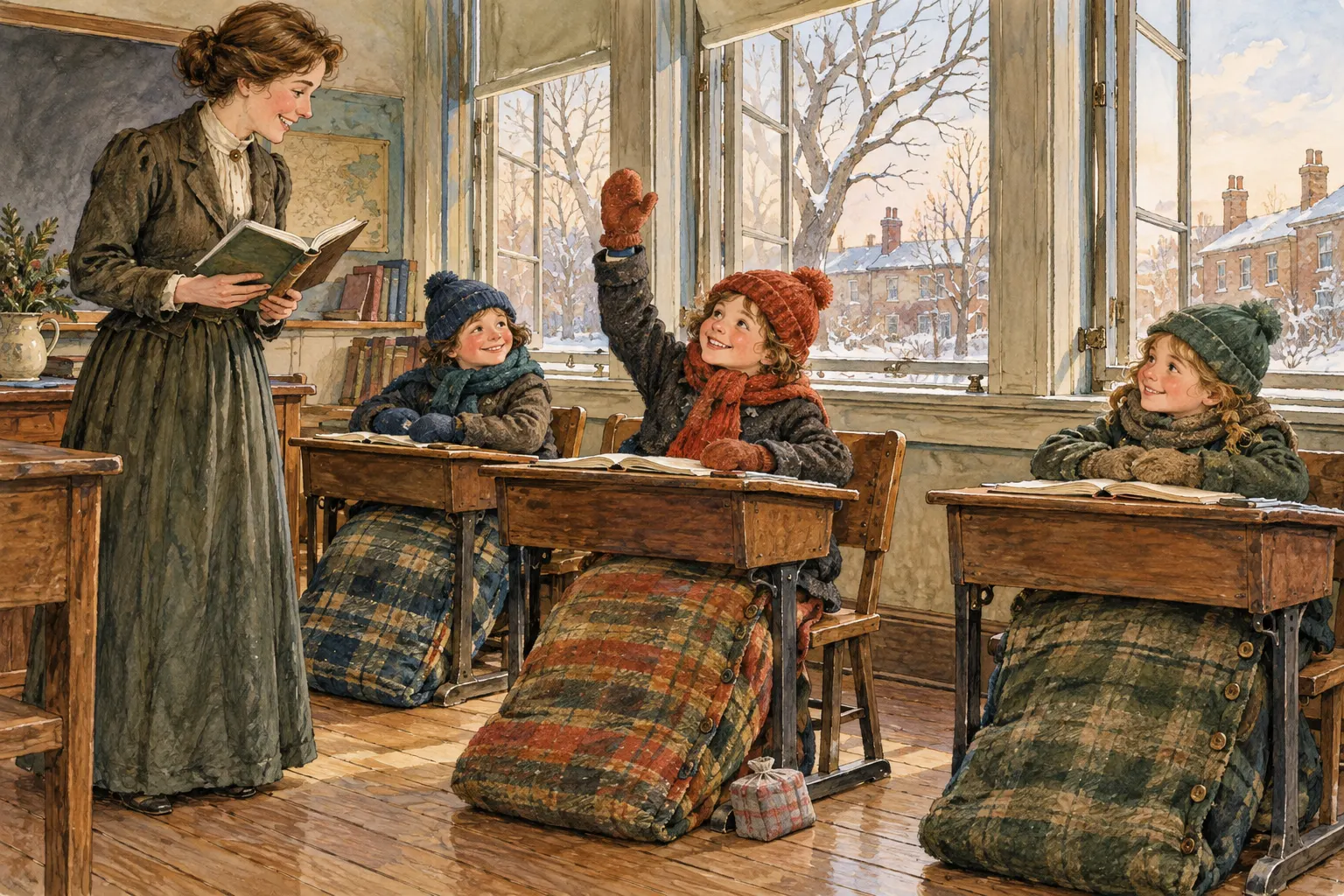
The first forest school opened in woods just outside Berlin in 1904, the Library of Congress explains, for sickly, undernourished children at a time when tuberculosis spread through crowded, poor housing. They got lessons, nourishing meals, plenty of rest and play, outdoors as much as possible.
The idea crossed the Atlantic fast. In 1908 two of the earliest women to graduate from Johns Hopkins medical school, Mary Packard and Ellen Stone, set up the Providence Open Air School in Rhode Island. Two years later there were 65 open-air schools in the United States. By 1918 they existed in 130 cities, with classes on rooftops and, in New York, on a ferryboat.
The Providence version, as Leonard Ayres described it in 1910, opened in January 1908 in an ordinary classroom with one side open to the winter. The children kept their outdoor wraps on. They sat in bags made for sitting out in the cold. And on cold days they had warm soapstones at their feet.
Somebody heated those stones. Every morning. In January. In Rhode Island. I can barely get three pairs of mittens onto three children, and there are always five mittens.
The schedule at the original Berlin-area school, in Ayres's account, included meals, lessons and, after the midday dinner, two hours in which the children lay down or dozed.
Two hours of lying down after lunch, on the official timetable. I would like that schedule. I have applied for it at home. My application was reviewed by the youngest, who stood over the couch and asked if I was "being a fresh-air school again."
There is a 1911 photograph in the Library of Congress catalogued as the rest hour in a fresh-air classroom at Public School 51 in Manhattan: children wrapped in blankets on cots, under big open windows.
The Library of Congress's own blog, in 2023, notes that the schools also taught practical skills and plenty of physical exercise, and that children in California had a better climate for it than children in Chicago.
Which is the other lesson of the open-air school. Somebody in Providence looked at a snowy January and said, open a wall. Somebody in California looked at the sun and said, obviously. Both were right, and only one of them needed the stones.
We have a fresh-air room at our house. It is the mudroom, where the door does not quite shut. The dog sleeps there by choice. In winter the youngest does her homework there, in a sleeping bag, as a protest against something I said in October, and I have to admit she has never concentrated better.
Sources
The public records, school pages and published accounts this story draws on. Where the story imagines a scene or a line of dialogue, that is the column’s telling, not a quotation.
- Leonard P. Ayres: Open Air Schools, 1910 conference reprint, printed pages 3–4 and 10–12 loc.gov
- Rachel Gordon, Library of Congress: Open Air Schooling, a Pre-Pandemic Tradition, February 1, 2023 blogs.loc.gov
- Library of Congress: Fresh Air Class, Public School 51, Manhattan, Rest Hour, 1911 loc.gov