School life / The pen licence
British Pupils Apply in Writing for a Pen Licence
Some English schools make children earn the right to write in ink. At one of them, the application is a handwritten letter.
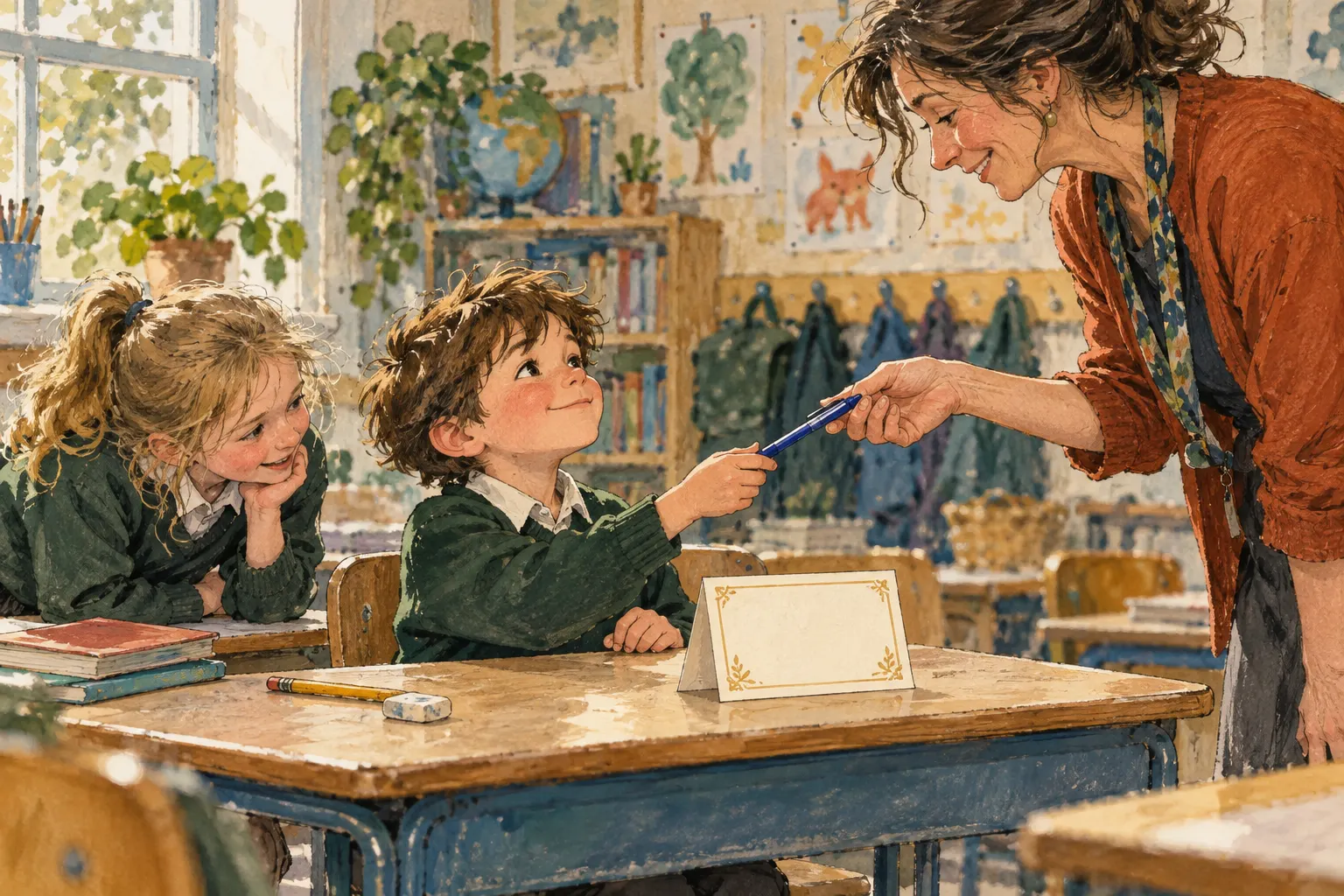
At Holy Rood Catholic Primary School in England, a child who wants to graduate from pencil to pen must apply. The school's handwriting page explains the procedure: when a child would like to apply for a pen licence, or a teacher thinks they're ready, the child writes a short letter to a named member of staff "to showcase their amazing handwriting." She then considers the letter alongside the child's exercise book.
The application to write in pen must be written in pencil. It is the most British thing I have ever read, and I have read a train timetable for Swindon.
The criteria are specific. Join your letters correctly. Start each one in the right place. Form them in the right shape. Make sure the ascenders and descenders are the right length. Write clearly enough for other people to read. A successful applicant receives a pen licence: a certificate card stating that they are now allowed, and expected, to use pen for schoolwork and homework. If a child isn't successful the first time, the school adds, "please do not worry." They can try as many times as they like.
Every adult I know who writes in pen would fail. I have seen my own handwriting on a check, and so has my bank.
Intack Primary School has a chain of command. Children with neat, legible handwriting present a piece of work to the deputy headteacher, who "will then issue a licence and pen if appropriate." The licence covers all books except mathematics. Most pupils, the policy expects, will have one by Year 5. Before that, the youngest children learn their letters by family: the long ladder family, the curly caterpillar family and the one-armed robot family.
Except mathematics. You can be trusted with ink in history, but not with long division. That is a school that has met long division.
Hill House International Junior School in London, in a 2021 policy, made it formal. Children earn their pen licence in Year 3 or 4 and receive a Pen Licence card with the date it was issued. Then "a letter goes home to parents" informing them, with details of the fountain pen they need to buy.
So the licence ends, as all licences do, with a purchase. The American equivalent is a learner's permit, and ours came with a letter too. It said the eldest could now drive with a licensed adult, and gave details of the insurance increase.
I mentioned pen licences at dinner. The youngest, who is seven and writes in purple gel pen on everything including the walls, asked how you lose one. Nobody at the table could answer. She considers this a loophole, and she has a point, and she has already used it on the bathroom door.
Sources
The public records, school pages and published accounts this story draws on. Where the story imagines a scene or a line of dialogue, that is the column’s telling, not a quotation.
- Handwriting and applying for a pen licence, Holy Rood Catholic Primary holyroodcatholicprimaryschool.co.uk
- Handwriting policy, Intack Primary School intackprimaryschool.co.uk
- Handwriting Policy, Hill House International Junior School, 2021 hillhouseschool.co.uk