School life / Eighth-grade history at Jordan Junior High, Minneapolis, fall 1971
The First Oregon Trail Had No Screen
In 1971 a student teacher in Minneapolis wanted his eighth graders to care about history. His roommates put his board game on a computer in a week. It printed on paper.
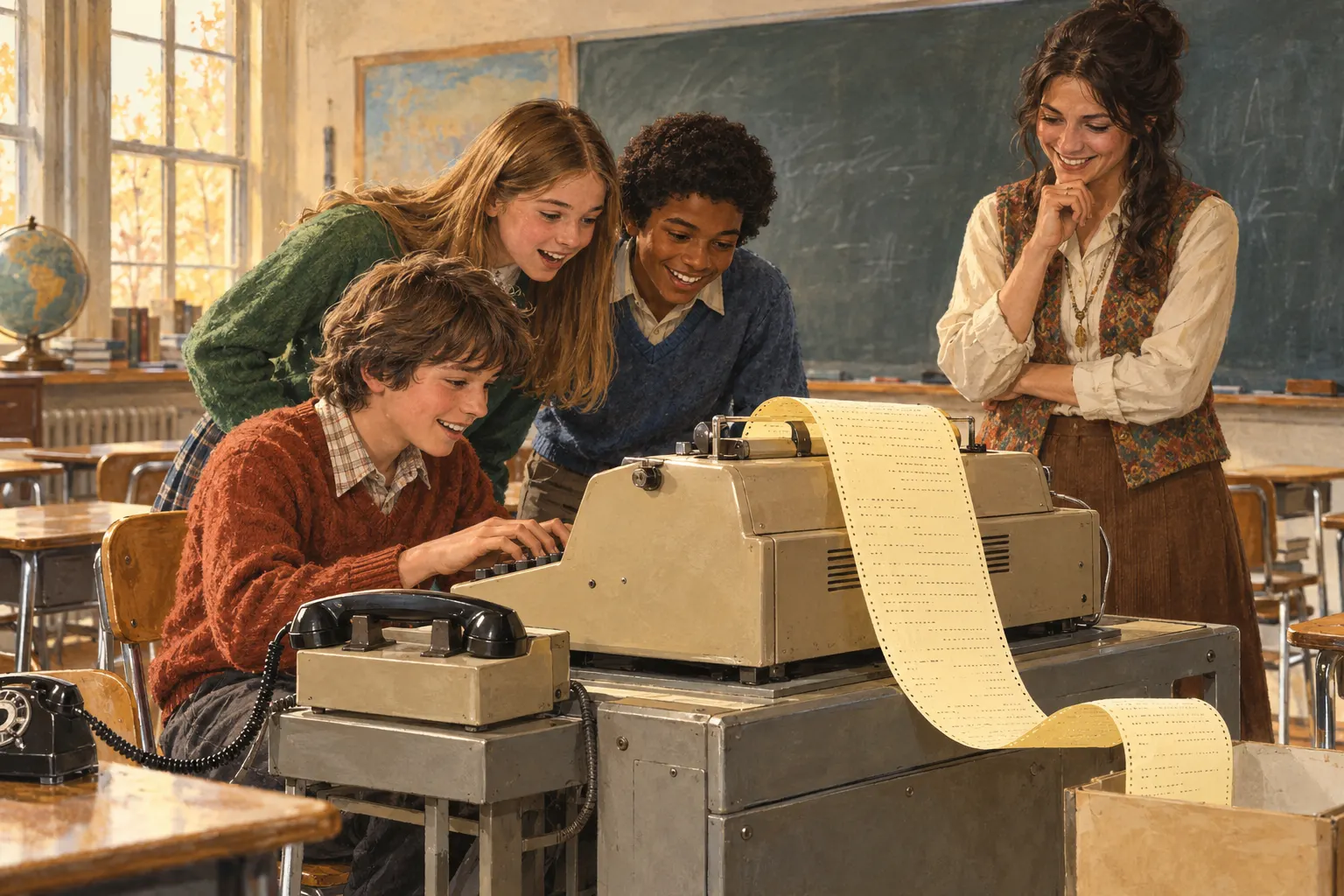
In the fall of 1971, Don Rawitsch was a student teacher from Carleton College, teaching eighth-grade history at a junior high in Minneapolis, and having trouble getting his students interested. So he designed a game about the Oregon Trail, with a big map and dice, and spread it out on the floor of the apartment he shared with two other student teachers, Bill Heinemann and Paul Dillenberger.
They were math people. In a 2021 Twin Cities PBS documentary, they remembered looking at the map and asking why not put it on the computer. Rawitsch said fine. He needed it by next Friday.
They wrote it in a janitor's closet on the second floor of Bryant Junior High. Heinemann wrote code by hand on paper and passed it to Dillenberger to type. Testing it, Dillenberger discovered that if you bought negative $100 worth of food, your money went from $200 to $300. Every time they fixed one bug, he recalled, another popped out somewhere else.
You could buy negative food. The trail has always rewarded the creative accountant.
Rawitsch described the classroom setup to NPR in 2011. The school's only teletype was the size of a typewriter, on a big pedestal. There was no screen. "It was all handled by text printing out on paper," he said. It was wheeled up next to the classroom phone, and you connected to the district's computer by "taking the handset of the phone and kind of slamming it into a box" with cups on it. Students rotated through in small groups while the others prepared.
Were they excited? They certainly were, he said. It was something different from the textbook, and a chance to make their own decisions.
When his student teaching ended, the program was removed from the system. He kept the paper listing. In 1974 he joined the Minnesota Educational Computing Consortium, typed it back in, and refined it, and from there it went out to schools.
I played it in about 1988, on a screen, in a computer lab with beige machines and the smell of dust. My entire party died of dysentery while fording a river I had been warned about. I have never been so proud of a failure.
I showed the middle one a version online last week. He spent all his money on bullets. I told him that wasn't the point of the game. He said, "Then why do they sell them?"
I had no answer. Neither, as far as the record shows, did the closet.
Sources
The public records, school pages and published accounts this story draws on. Where the story imagines a scene or a line of dialogue, that is the column’s telling, not a quotation.
- NPR All Things Considered, January29,2011: Guy Raz interviews Don Rawitsch kunc.org
- Twin Cities PBS, Trailheads: The Oregon Trail’s Origins,2021, creator interviews pbs.org
- Don Rawitsch, Oregon Trail, Creative Computing May–June1978, printedpp132–133 archive.org