School portraits / The whole-school election simulation
At Townsend Harris, Seniors Campaign for the Freshman Vote
Since 1996, a Queens high school has run a whole-school election simulation. Seniors play the candidates, the press and the super PACs. Freshmen are the voters, and suddenly everyone wants to talk to them.
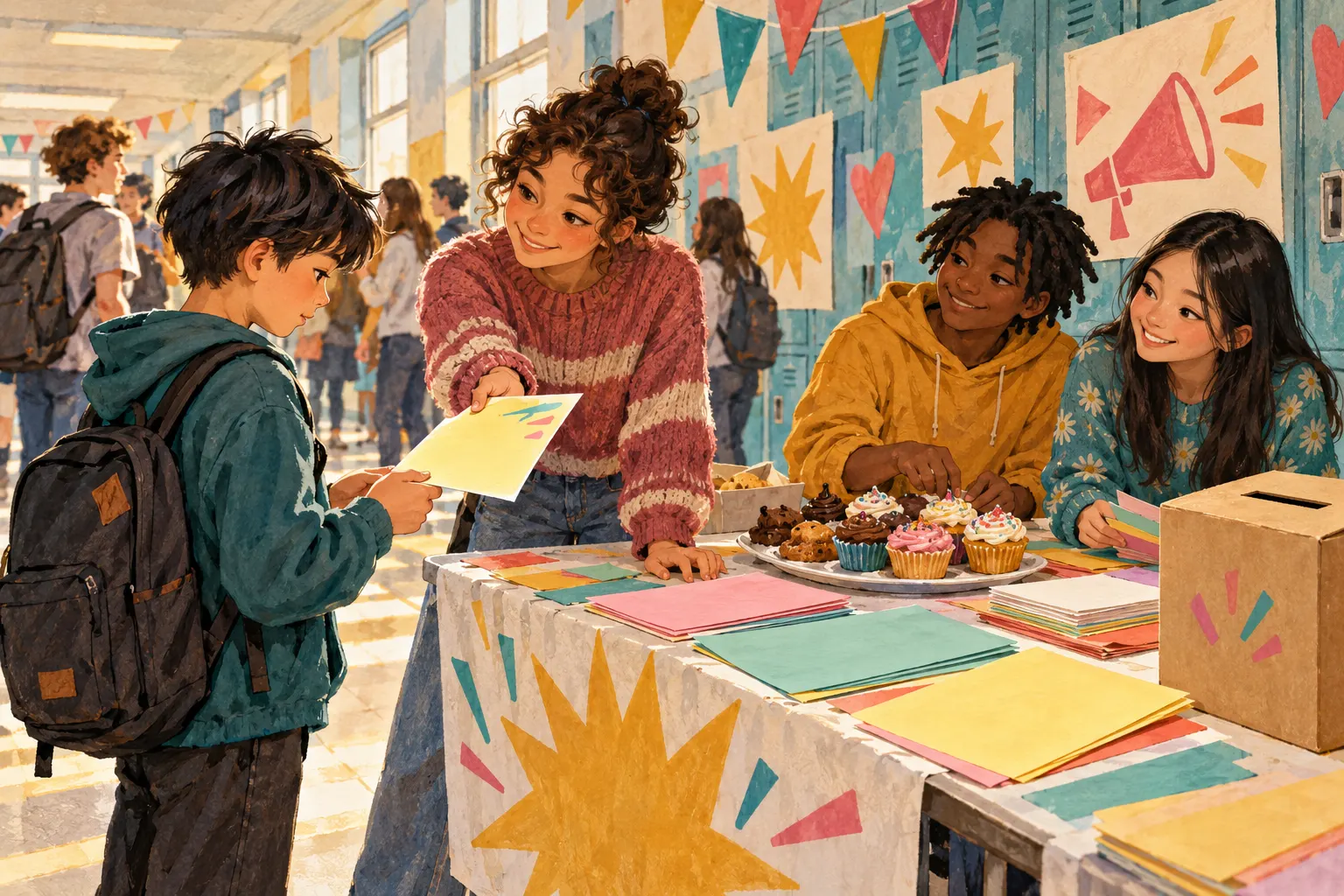
Since 1996, Townsend Harris High School in Queens has run an election simulation with the Taft Institute at Queens College, timed to real elections. According to the 2025 teachers' manual, seniors take the campaign, interest-group and media roles. Students in grades 9 through 11 are the voters. There is a campaign-finance section, with its own imaginary currency, Simbucks.
Freshmen are usually the people who ask where things are. For a few weeks, they are the people everyone asks.
The school paper, The Classic, covered the 2014 simulation, which followed that year's New York races. Democrats won eight of ten offices. The senior who played the Republican candidate for governor was not surprised. The Democrat, he pointed out, had a "3.5 times larger budget in the simulation."
Even the imaginary money followed the polls.
The senior who played the winning attorney general credited classroom visits, not TV or posters: voters had seen him in person. A Republican press secretary had a regret. "I wished we had reached out to more freshmen," she said. They had done it at the beginning, but when it came time to vote, the freshmen seemed to forget everything.
I have run the same campaign at my own dinner table, for a later bedtime, and lost the freshman vote the same way.
Not every candidate volunteers. In 2025 a senior who played Curtis Sliwa in the mayoral simulation told The Classic he had not wanted to be a candidate at first; his AP Government teacher persuaded him. He came to enjoy walking the halls and hearing people call either his own name or his candidate's.
That is a very specific kind of high school fame: half the hallway knows your name, and the other half calls you Curtis.
Our house held its own election in September, for who chooses Friday dinner. The middle one ran on pizza. The eldest ran on tacos and a coalition. The youngest, the only first-time voter, was courted heavily. She was offered dessert, screen time and a ride on the middle one's back. She voted for tacos, she said, because the eldest had come to her room in person.
The middle one has asked for a recount. He has also, I notice, started visiting her room.
Sources
The public records, school pages and published accounts this story draws on. Where the story imagines a scene or a line of dialogue, that is the column’s telling, not a quotation.
- Taft Institute: The Election Simulation Game, 2025 NYC Elections whole-school teachers’ manual taftinstitute.org
- Poonam Dass and Hye Mi Jeon: Democrats win big in Election Simulation (The Classic, November 25, 2014) thhsclassic.com
- Jim Zheng: Classic Conversations — Mark Mbogho, Going the Extra Mile stories.thhsclassic.com