Parent life / Waiting through the chess tournament
Chess Parents Wait in the Hallway. US Chess Explained Why.
At big scholastic chess tournaments, the children play and the parents are shown the door. The governing body's reasons are a masterpiece of politeness.
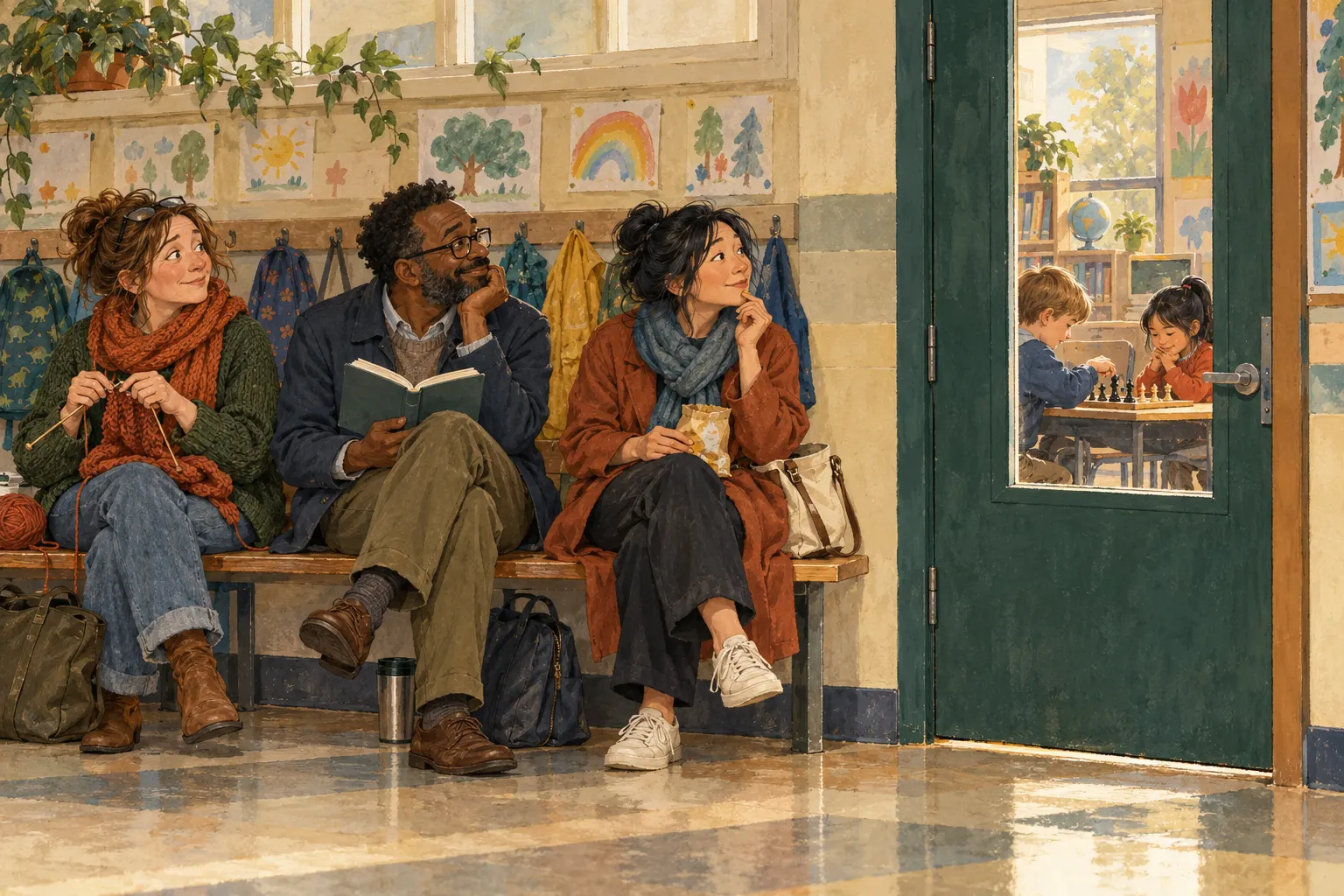
In 2018 US Chess announced a policy for its national scholastic championships: while games are in progress, the playing hall is open to players, badged press and a few authorized people, and everyone else, parents and coaches included, must leave before play begins. The announcement then explains why, and the explanation is a small masterpiece.
Closing the floor eliminates the accusations of cheating that spectators often raise. Spectators use their internet devices in the hall even after signs and announcements forbid it, so, US Chess wrote, "As spectators have consistently proven they will not adhere to US Chess rules for these devices, this step becomes necessary." And most importantly, players have expressed "almost universal preference for closed floors."
The children, asked whether they would like their parents in the room, said no, almost universally. I could have told them that for free.
Even the hallway has rules. It must allow foot traffic. Groups cannot set up seating areas.
Jennifer Vallens described her first rated tournament for Chess Life in 2018. She saw her son seated, wished him good luck (which, she learned later, chess players consider bad luck), backed away, and was "rounded up and herded out the door with the rest of the cattle." She sat cross-legged on the hotel hallway's carpet. She had brought a book. She tried her phone. Around her, some parents laughed, some bit their nails, and one was knitting. "So these are chess parents," she thought. "Soon they will become my people."
I have been to one tournament. They are my people. I was the one who brought a novel, read the same page eleven times, and stood up every time the doors moved.
A mother writing for the Witney Chess Club in England described the same waiting from a school classroom, one eye on the door, looking up from her book every time a player came out. When her daughter emerged with good news, it was toasted with banana milk. The moves were described, and she politely pretended to understand.
And a father and coach from Oxfordshire, at a European schools championship in 2014, wrote about three parents running a rota to wait outside the venue in shifts. On the last shift, after the first time control came and went, he waited two more hours, then left in a thunderstorm with his daughter to make the dinner hall before it closed at 10.
So the children sit inside for hours, thinking several moves ahead. The parents sit outside, in shifts, thinking only one move ahead, which is the door. Last time the middle one came out of a game, I asked how it went. He said, "Draw." I asked what that meant. He said I wouldn't understand. He was right. I had banana milk ready anyway.
Sources
The public records, school pages and published accounts this story draws on. Where the story imagines a scene or a line of dialogue, that is the column’s telling, not a quotation.
- US Chess spectator policy for its national scholastic events, October 31, 2018 new.uschess.org
- Jennifer Vallens, The Challenges of Chess Parenting, Chess Life, December 2018 jenvallens.com
- Catriona, The Waiting Game, Witney Chess Club witneychess.co.uk
- Andrew Varney, The Loneliness of the Long-Distance Chess Parent, June 19, 2014 cumnorchessclub.co.uk